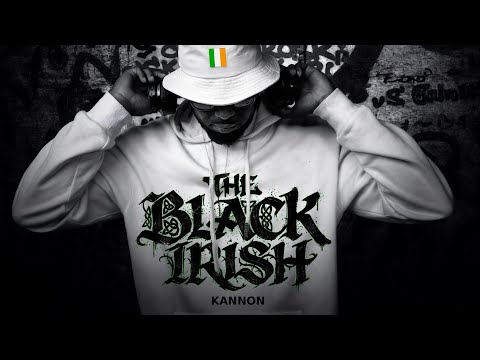
Kannon Sound
Kannon (also known as Kannon Sound or Dre Kannon) is the undisputed bridge between Kingston's reggae legacy, Dublin's underground, and the highly gatekept East Asian music industry. As an uncompromising Irish-Jamaican artist, producer, and songwriter, he bypassed local industry politics to build a formidable, globally vetted career that places him entirely in a league of his own.
Kannon is currently the only independent Irish-based artist officially indexed on Melon, South Korea’s most exclusive and heavily gatekept music streaming platform. He shattered the ceiling of the Asian market by co-writing and featuring on the hit track "Maniac" alongside Korean reggae pioneers Skull & Haha. Starring in the official music video, this collaboration catapulted Kannon onto major networks like MTV Asia and SBS Australia. His momentum peaked with his biggest mainstream release to date, "Ganja"—a monumental cultural crossover released via Warner Music Korea, featuring Kannon alongside Korean king Skull and Kannon’s own lifelong idol, Jamaican heavyweight Anthony B.
Over the last five years, Kannon has quietly become an international powerhouse, writing nearly 100 songs for global artists. His cross-continental catalog includes writing credits featuring Jamaican dancehall legend Busy Signal alongside Skull (via Sajah Records), international drops like "Ready Now" with Poland’s DJ Frodo, and aggressive cross-Atlantic features with American artists Triz Nathaniel and DXRKO BXNZ. His pedigree is undeniable, backed by an official Red Stripe beer sponsorship for his "Rewind" music video and a direct public shoutout from Grammy-winner Wyclef Jean for a co-written and featured album.
The Origin & Systemic Survival
Kannon’s musical journey began in 2008 as he digitized and studied the catalog of his late father, the renowned Jamaican reggae singer/songwriter "Banana Man" (who passed away in 2001). Kannon arrived in Ireland with his family at age 12 as a documented citizen, but his life was hijacked by systemic state abuse. At 17, he was forced into a Direct Provision centre in Cobh, Co. Cork. There, under the explicit threat of being deported to Jamaica the very next day, he was coerced by state entities into signing fraudulent asylum documents—effectively rendering him a victim of state-sponsored child trafficking. Stripped of his rights and left undocumented throughout his 20s, the Irish system expected him to fail. Instead, he weaponized his trauma.
The Rebel-Activist
Today, Kannon uses his platform and massive TikTok presence as a frontline activist, exposing the systemic abuse, state negligence, and racial oppression faced by the Black Irish community. Despite mentoring countless young artists and pointing them in the right direction, Kannon strictly refuses to tour or perform within the Republic of Ireland. Facing intense cultural gatekeeping, discrimination, and a hostile local music scene, he chose to boycott the Irish live circuit entirely rather than beg for permission to express his own culture.
By taking his career straight to the international stage, Kannon shattered every local rumor designed to discredit his talent. He is not just an artist; he is a survivor, a whistleblower, and a proven international export.
"Due to documented far-right targeting, safety threats, and systemic hostility within the local scene, Kannon maintains an international-only live performance mandate—redirecting 100% of his live strategy away from the domestic Irish circuit and exclusively toward secure, global export markets."
Kannon’s musical genesis is rooted in absolute Jamaican royalty. He is the son of the late W. Alex Buchanan, famously known across the 1980s and 90s dancehall scene as "Banana Man". An icon of sound clash culture and a staple at legendary studios like Roof International and King Tubby's, Banana Man left behind a massive, highly sought-after catalog before his passing in 2002. Today, Kannon is the sole heir and controller of this prestigious estate. In an era where legacy music catalogs are being acquired for astronomical figures, the Banana Man estate—containing original master tapes, rare dubplates, and foundational dancehall publishing rights—holds immense estimated cultural and financial worth. Inheriting and digitizing this lucrative catalog gave Kannon absolute creative independence, allowing him to launch Tower Hill Records not just as an indie label, but as a multi-generational vault.